Translate

Saturday, 13 October 2018

When Is Good, Good Enough?


Oct 14, 2018 Readings:  Job 23: 1-17, Psalm 127, Mark 10: 17-31
How many of us here today have been faced with this question at some point in your life, whether as an adult or a child.   Don’t they recognize what I have done, I’ve done my best but my best never seems to be good enough,   For many, this is especially true when dealing with family, work, or even play?   Does this sound familiar to you?  Well it was for me.    Most of us who have had this experience when we were young came to the conclusion that no matter how hard we tried, good never seems to be good enough.  “What’s Good for anyway and what kind of Good is good enough”    Most of us have been brought up to believe as did the rich man in the story from Mark today,  that if we do enough good deeds, follow the ethical and moral laws of the land, surely that’s good enough, at least good enough to get us into heaven right!  The GOOD GET TO GO right!!!!     Let me tell you a story. 
A Sunday school teacher was looking for a way to explain to the 8 year olds in his class what someone had to do in order to go to heaven.  In an attempt to discover what the kids already believed about the subject, he asked a few questions.  If I sold my house and car, had a big garage sale and gave all my money to the poor would that get me into heaven?   No the children answered.   If I attended Church every week, helped on all the committees and mowed the yard, would that get me into heaven?  No the children answered.   If I was kind to animals, nature and gave candy to all the children, loved my wife and was good to my neighbors; surely that would get me into heaven?   Once again the children answered No!!   Well then, said the teacher “how can I get into heaven.”  A boy in the back row stood up and shouted “YOU GOTTA BE DEAD”  
Here in lay the problem:  Now think about this for a moment FOLKS for you literally have to die in order to find out if there even is a heaven to get into.  Consequently, only the dead can truly know much about the after-life.    You know there are some people who seem to be confident about what eternal life is like, they are those who claim to have died and come back to tell us about it, and what do they say.   Well you have to read about it, in one of their bestselling books on the subject and some make a lot of money doing it.   There stories are interesting and they get a lot of attention from their readers but, they still never really answer the age old question,   how do we get there?   One of the big assumptions for most of us who have been brought up in North America is that the “Good People Get to Go”.  But that brings up another question, if only good people get to go “WHO” sets the standard for GOOD and what measure of this good is good enough?  Well then what did Jesus say in the reading from this morning?   Mark 10: 18  18 “Why do you call me good?” Jesus answered. “No one is good—except God alone.
If we take Jesus seriously as found in Gospel of Mark, it clears up the whole problem of who or what is good,  because according to Jesus nothing we do can be compared to the Goodness of God.    Only God is entitled to be seen as good.  This was devastating to the rich man, because, according to Jesus, his notion of Goodness was irrelevant, in fact so is ours.   Human Goodness, no matter how good we think it is, will not guarantee us anything.  You have heard the saying, only the good die young.  This may come as a shock to a lot of people especially those who have fallen into the trap of believing in brownie points as did the rich man.   Now I don’t want to take the wind out of anyone’s sails or suggest that our good works are meaningless because we all know that’s not true.  Our good works here are for the benefit of each other, our good works lay the foundation for God’s Kingdom here on earth, which according to Jesus isn’t later but is at hand, meaning now, not sometime later in an after- life. The kingdom is begin built as we speak whenever we mimic the goodness of God.   God and the heavens rejoice when one of us does a good works no matter who performs it, or how it is offered.  BUT!!!  As humans we are flawed, we have invisible strings attached to our goodness, and if exposed as was the case of the rich man with Jesus, we also will see, compared to the Goodness God we are but a shadow of that good.   Jesus does not stop loving the rich man even though he can’t give up his riches Jesus love him anyway.   He loves us too, unconditionally, even though we aren’t ready yet either to give over all, we to hold back.   God’s goodness, poured out upon us, is without obligation.  There are no strings attached to the blessings God continues to pours upon us.   We receive his blessings by grace, and it is completely free of obligation.   You don’t have to earn them nor can you improve on them and no one is denied.   Jesus said in Mathew 5: 44-45,  “But I tell you, love your enemies and pray for those who persecute you, that you may be children of your Father in heaven. He causes his sun to rise on the evil and the good, and sends rain on the righteous and the unrighteous.  It is the same with God’s LOVE and God’s Forgiveness, there are yours for the receiving, you don’t earn them.     Yet we need to understand that our good deeds and acts of compassion are meant as an offering to God but not to have him look favorably upon us.  They are offerings made to honor God in obedience to Gods will.  These offerings help to build the foundations of faith in others and give others hope when things seem to be hopeless.   Therefore we need to be humble, not making claim to the goodness that is produced in us, for it doesn’t come from us, but through us, from the author of Good.    In verse 27 Jesus makes it clear that salvation is not based on human effort, for humans cannot save themselves, we in fact need to be saved from ourselves.  He goes on to point out that with God’s unconditional blessing of grace, all things are then made possible.  What should we do?  Do as Jesus tells us Matthew 3: 2, repent, meaning stop turning away from Gods will for us and enter my kingdom now, which is at hand, it already exists for you says Jesus   He asks us to follow in His way, and He will offer you a new lease on life, a fresh start.  Give Him what you can, He knows you can’t give it all over at once, but the day will come when you must.  Jesus continues to loves us anyway and still He offers us new life.  The past will begin to fade, and the future will be full of hope as we begin to live the moments of our day in Him.   Let us be the example of God’s goodness in the world, for this truly is what we are meant to be, we are meant for service, service to one another.  


Saturday, 6 October 2018

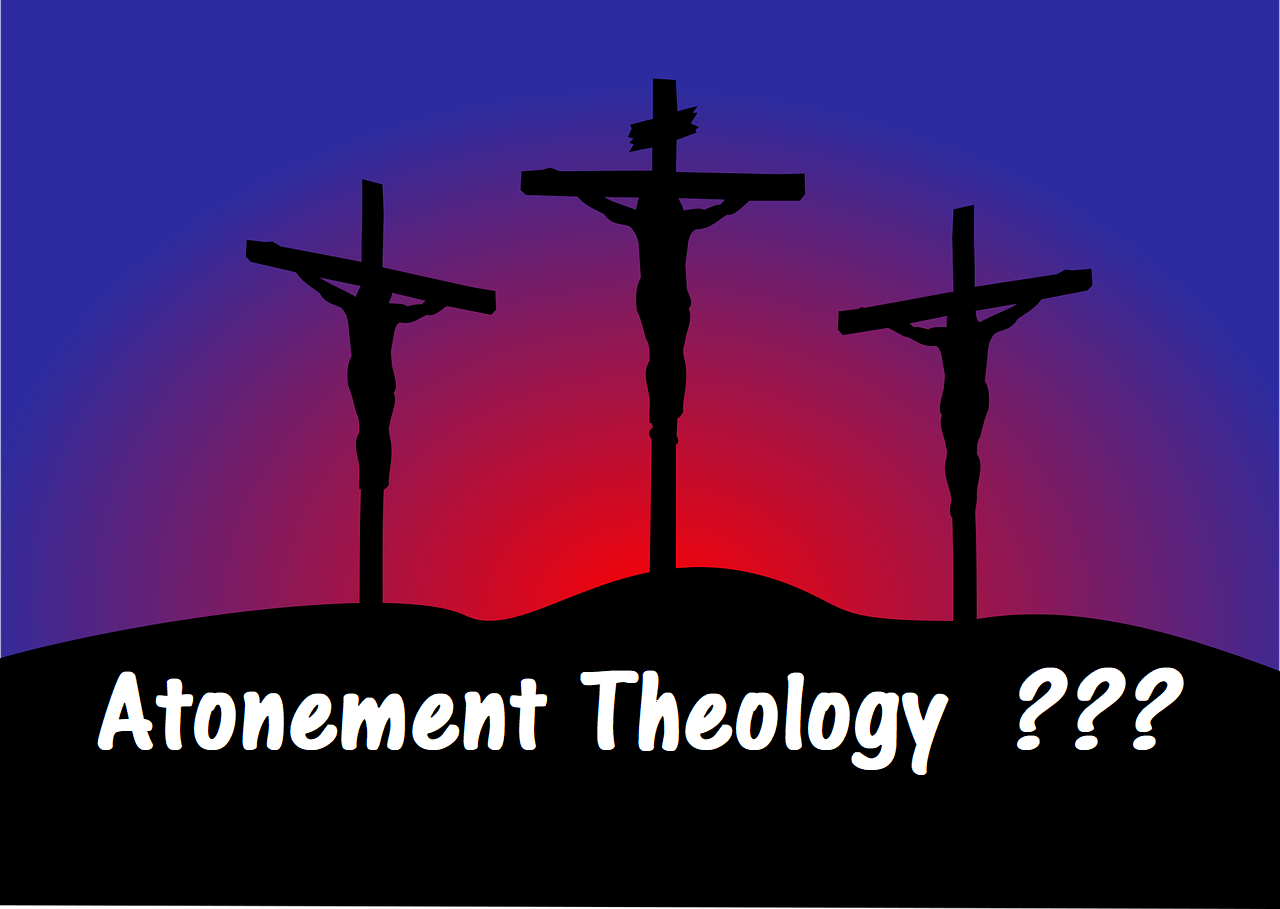
"Atonement Do You Have Questions"


Oct 7 2018 proper 22 “Worldwide Communion Sunday” Job 1:1   &   2: 1-10
Hebrews 1: 4,  &   2:5-12               
In the begging years of my pulpit ministry, the book of Hebrews for me appeared to be an exclusively bloody interpretation of atonement theology.  So much so, in the beginning I just mostly avoided it.   The idea that God would will the sacrifice of his only Son in such a violent ghastly way was simply repulsive to me.  A sacrificial human for the sins of the world?   I must admit I was not fully convinced of this theological perspective.  It was not until much later in my ministry that I began to meet Jesus in a deeper more healing way through the Hebrew text.   I began to see Jesus as the exact imprint of God’s very being.  In fact, the Jesus these passages began to introduce me to, would show me a path that would lead me towards polishing and reflecting the image of God’s love in my own life. 
Educator the Rev. Dr. Rodger Nish-i-ok-a has helped the contemporary Church understand what our dropout young adults are yearning and searching for.  According to Hishioka they are “not” looking for a halo crowned, white robed, squeaky clean Shepheard who gathers little children around him.  No, they are longing for a tangible, perceivable, passionate Jesus that doesn’t just speak of the human condition, suffering and the outcast in society, but actually becomes a living example of this human experience.   Jesus doesn’t project an image of becoming one with the elite and powerful within the world but projects and image of becoming one with the poor, the suffering and the outcast in the world.   And so I began to see that there was no other way that God could do this but to allow His only begotten Son to become fully human.  To live and experience life as we do.  Not just the joy, laughter and fellowship but also the rejection, the humiliation, the pain and suffering that love and loss bring with it.  That is the Jesus we must get to know too folks.  The book of Hebrews unveils this passionate, loving, yet suffering Jesus.  The human Jesus who is made perfect through the excruciating suffering and reality of the human experience.   Here in lies the mystery! Jesus the Christ embodies the authenticity of human life and the authenticity of divine love all wrapped up in His mysterious incarnation.   Jesus is the real thing folks.  Let just say He is the full meal deal.  It doesn’t get any better than this.  Fully human yet, full of divine unconditional love for all of humanity as it was expressed on the cross.    
To the Jews “Christ crucified” was a scandal.  The mysterious God, the one they called Messiah, dead never to be seen again.   To the Greeks “Christ crucified” why he was foolishness, because for them, a God who feels, suffers, weeps and dies was an abomination to superior logical Greek mind a true God would have no need of this experience.   May I suggest to you that Atonement presented only as the Lamb that takes away the sins of our world, has superseded His wondrous act of divine love and the unshakable obedience to His fathers will.  Luke 22: 42 “Father, if you are willing, take this cup from me; yet not my will, but yours be done.”  To paraphrase this passage in my own words.  He goes kicking and screaming but he goes, never walking away from the path of His Fathers will.  Even unto a cross.  That is the deepest expression I can think of for a Son's love.  You now can hear and understand the expression "It wasn't the nails that kept Jesus hanging on the cross, it was LOVE. 
The idea of a super powered hero is so far removed from our humble human experience that many can only worship Jesus at arm’s length or from afar.  A personal relationship!   Why it seems almost impossible for so many Church going folk.   
I am more and more convinced that the uniqueness of the Christian life is the radical way in we are called to embrace the paradox.   Grace and truth, life and death, darkness and light, suffering and joy. In the rich verses of Hebrews we are given a Jesus who embodies glory and humiliation, power and suffering, authority and servanthood, radical grace and radical obedience.  Each side of the paradox makes the other side possible.  This is the kind of God that makes His Son possible and personal.  God knows our struggle and God’s love brought to us through Christ Jesus can never be taken from us. 
All we are asked to do is to accept Him a master over our lives by taking Him into our hearts, follow in His ways so we can be with Him now and for evermore.  Now isn’t that GREAT!    As we come to the table today let us be reminded that the Jesus who committed himself to the cross through obedience and love is here in our hearts with us today.
                                        Sow Mercy, Sow Grace


Thursday, 4 October 2018

"What is Truth"


Human history is in a time of great flux, of great cultural and spiritual change. The psyche doesn’t know what to do with so much information. I am told that if you take all of the information that human beings had up until 1900 and call that one unit, that unit now doubles every ten years. No wonder there’s so much anxiety, confusion, and mistaking fact for fiction and fiction for fact!
In light of today’s information overload, people are looking for a few clear certitudes by which to define themselves. We see various forms of fundamentalism in many religious leaders when it serves their cultural or political worldview. We surely see it at the lowest levels of religion—Christianity as well as Judaism, Islam, and secular fundamentalism, too—where God is used to justify violence, hatred, prejudice, and whatever is “my” way of doing things.
The fundamentalist mind likes answers and explanations so much that it remains willfully ignorant about how history arrived at those explanations or how self-serving they usually are. Satisfying untruth is more pleasing to us than unsatisfying truth, and Big Truth is invariably unsatisfying—at least to the small self.
Great spirituality, on the other hand, seeks a creative balance between opposites. As Jesuit William Johnston writes, “Faith is that breakthrough into that deep realm of the soul which accepts paradox with humility.” [1] When you go to one side or the other too much, you find yourself either overly righteous or overly skeptical and cynical. There must be a healthy middle, as we try to hold both the necessary light and darkness.
We cannot settle today’s confusion by pretending to have absolute and certain answers. But we must not give up seeking truth, observing reality from all its angles. We settle human confusion not by falsely pretending to settle all the dust, but by teaching people an honest and humble process for learning and listening, which we call contemplation. Then people come to wisdom in a calm and compassionate way. There will not be the knee jerk overreactions that we have in so many on both Left and Right today.
The Judeo-Christian tradition was not supposed to be a top-down affair, but an organic meeting between an Inner Knower (the Indwelling Holy Spirit) accessed by prayer and experience; and the Outer Knower, which we would call Scripture (Holy Writings) and Tradition (all the ancestors). This is a calm and wonderfully healing way to know full Reality.


Sunday, 16 September 2018

Where Did Christianity Go Wrong Continued?


Richard Rohr
From the Center for Action and Contemplation

Western Christianity
The Christian Contemplative Tradition
Sunday, September 16, 2018
Catholicism and Eastern Orthodoxy have a long tradition of teaching contemplation or nondual consciousness. But its systematic teaching was primarily held in the Eastern “Greek” church; the Western “Latin” church was more extroverted and aligned with empires.
Serious contemplative teaching—very upfront in the desert fathers and mothers—is surely found in Celtic Christianity (outside of empire), and is continued by leaders of many monasteries, for example, by John Cassian (360–435 CE), Pseudo-Dionysius (5th–6th centuries), and Hugh of St. Victor (1096–1141) in Paris. Later mystics like Bonaventure (1221–1274), Francisco de Osuna (1497–1541), the unknown author of The Cloud of Unknowing (late 14th century), and 16th century mystics Teresa of Ávila (1515–1582) and John of the Cross (1542–1591) also taught nondual consciousness. It held on much longer in the religious orders than the ordinary local church or with the common priest or bishop—whose ministry was an occupation more than a search for God or a “school for the Lord’s service,” as St. Benedict (480–547) described. [1]
Most Western mystics exemplified contemplation, as did Jesus, much more than they directly taught it. Maybe this is part of the reason many Christians lost it, and why good theological teaching and practice is now so important today. After the fights of the Reformation, and after the over-rationalization of the 17th and 18th century Enlightenment, many of us Western Christians became very defensive, wanting to prove we were smart and could win arguments with the new secularism. We imitated the rationalists while using pious Christian vocabulary. It took the form of heady Scholasticism and rote formulas in Catholicism, and led to fundamentalism and memorized Scripture verses providing their own kind of “rationalism” among many Protestants.
Catholic doctrines (such as transubstantiation, papal infallibility, and hierarchical authority) came to be presented in a largely academic and juridical way (or, for the sacraments, with an almost magical interpretation), as opposed to a contemplative or mystical way. Frankly, all of this inspired few and drove many away from Christianity. Most priests were educated this way until the much-needed reforms of Vatican II in the 1960s. Thomas Merton (1915–1968) was very influential in reintroducing contemplation to the West. Now it is again taught in Christian arenas all over the world under different names.
What we now call contemplation—a unique way of knowing—is a rediscovery of our earlier Christian practice. Basically, contemplation is the way you know and think of yourself when you are sincerely praying and present—as opposed to thinking, arguing, or proving.
As Archbishop Rowan Williams, former leader of the Anglican Church, told the Synod of Catholic Bishops in Rome:
Contemplation is very far from being just one kind of thing that Christians do: it is the key to prayer, liturgy, art and ethics, the key to the essence of a renewed humanity that is capable of seeing the world and other subjects in the world with freedom—freedom from self-oriented, acquisitive habits and the distorted understanding that comes from them. To put it boldly, contemplation is the only ultimate answer to the unreal and insane world that our financial systems and our advertising culture and our chaotic and unexamined emotions encourage us to inhabit. To learn contemplative practice is to learn what we need so as to live truthfully and honestly and lovingly. It is a deeply revolutionary matter. [2]
Despite centuries without systematic teaching of nondual consciousness, many seekers have now come to contemplation as the fruit of great suffering or great love. These are the quickest and most universal ways that God uses to destabilize the self-referential ego. Those transformed by life and grace come to enjoy the presence of God, others, and even themselves. They have connected with their deepest Source, an identity that goes far beyond ideas of right and wrong.
Great suffering, great love, and contemplative practice can instill in us “the same mind which is in Christ Jesus” (see Philippians 2:5-11, 4:4-7, and 1 Corinthians 2 and 3). Indeed, I believe contemplative, nondual consciousness is the mind of Christ.
Gateway to Presence:
If you want to go deeper with today’s meditation, take note of what word or phrase stands out to you. Come back to that word or phrase throughout the day, being present to its impact and invitation.
[1] Benedict, Rule, Prologue. See Joan Chittister, The Rule of Benedict: A Spirituality for the 21st Century (Crossroad Publishing: 2014, ©1992), 21.
[2] Archbishop Rowan Williams, Address to the Synod of Bishops in Rome (October 10, 2012), http://rowanwilliams.archbishopofcanterbury.org/articles.php/2645/archbishops-address-to-the-synod-of-bishops-in-rome.
Adapted from Richard Rohr, Silent Compassion: Finding God in Contemplation(Franciscan Media: 2014), 63-65.
Image credit: Country Gate at Dawn(detail), Anton Goncharov.


Thursday, 13 September 2018

"Eastern Christianity"

Monday, 3 September 2018

Where And When Did Religion Go Wrong?


 Early Christianity
A Changing Religion
Monday, September 3, 2018

Much of what Jesus taught seems to have been followed closely during the first several hundred years after his death and resurrection. As long as Jesus’ followers were on the bottom and the edge of empire, as long as they shared the rejected and betrayed status of Jesus, they could grasp his teaching more readily. Values like nonparticipation in war, simple living, inclusivity, and love of enemies could be more easily understood when Christians were gathering secretly in the catacombs, when their faith was untouched by empire, rationalization, and compromise.
Several writings illustrate this early commitment to Jesus’ teachings on simplicity and generosity. For example, the Didache, compiled around 90 CE, says: “Share all things with your brother, and do not say that they are your own. For if you are sharers in what is imperishable, how much more in things which perish!” [1]
The last great formal persecution of Christians in the Roman Empire ended in 311 CE. In 313, Constantine (c. 272-337) legalized Christianity. It became the official religion of the Roman Empire in 380. After this structural change, Christianity increasingly accepted, and even defended, the dominant social order, especially concerning money and war. Morality became individualized and largely focused on sexuality. The church slowly lost its free and alternative vantage point. Texts written in the hundred years preceding 313 show it was unthinkable that a Christian would fight in the army, as the army was killing Christians. By the year 400, the entire army had become Christian, and they were now killing the “pagans.”
Before 313, the church was on the bottom of society, which is the privileged vantage point for understanding the liberating power of Gospel for both the individual and for society. Within the space of a few decades, the church moved from the bottom to the top, literally from the catacombs to the basilicas.The Roman basilicas were large buildings for court and other public assembly, and they became Christian worship spaces.
When the Christian church became the established religion of the empire, it started reading the Gospel from the position of maintaining power and social order instead of experiencing the profound power of powerlessness that Jesus revealed. In a sense, Christianity almost became a different religion!
The failing Roman Empire needed an emperor, and Jesus was used to fill the power gap. In effect, we Christians took Jesus out of the Trinity and made him into God on a throne. An imperial system needs law and order and clear belonging systems more than it wants mercy, meekness, or transformation. Much of Jesus’ teaching about simple living, nonviolence, inclusivity, and love of enemies became incomprehensible. Relationship—the shape of God as Trinity—was no longer as important. Christianity’s view of God changed: the Father became angry and distant, Jesus was reduced to an organizing principle, and for all practical and dynamic purposes, the Holy Spirit was forgotten.

Gateway to Presence:
If you want to go deeper with today’s meditation, take note of what word or phrase stands out to you. Come back to that word or phrase throughout the day, being present to its impact and invitation.


[1] Didache 4:8. See Tony Jones, The Teaching of the Twelve: Believing and Practicing the Primitive Christianity of the Ancient Didache Community (Paraclete Press: 2009), 23. More about the Didache is available at http://www.earlychristianwritings.com/didache.html.
Adapted from Richard Rohr, Dancing Standing Still: Healing the World from a Place of Prayer (Paulist Press: 2014), 48-51; and
Things Hidden: Scripture as Spirituality (Franciscan Media: 2008), 100.
Image credit: Saint Catherine's Monastery (detail), built between 548-565 near the town of Saint Catherine, the Sinai Peninsula, Egypt.

Monday, 27 August 2018

"I Don't Belong Here"


              A Message by long time friend, singer song writer and Lay Preacher:  Lawry MacLeod:
                                              I  Don’t Belong Here                         Aug. 26, 2018.
Two years ago, a gentleman by the name of Brian Justin Crum, appeared on America’s Got Talent and sang a song called “Creep”.  He told a bit of his life story, about being gay, being ostracized and beaten up because of it, and how he poured himself into music to escape his torment.  Then he sang, and when he was finished, something extraordinary happened.  For three whole seconds, there was absolute silence; no one moved, no one spoke, no one cheered.  His last chorus read, “I’m a creep, I’m a weirdo, what the (heck) am I doing here?  I don’t belong here, I don’t belong here.”  After those three ominously-quiet seconds, all 2000 people in that theatre erupted into a cacophony of clapping and screaming and cheering and every judge, except Simon Cowell, gave Brian a standing ovation.  There were smiles and tears, whispers of amazement and shouts of adulation.  And Simon Cowell gave one of the most amazingly positive reviews he has ever shared on the show.  If you have a computer or an I-pad or I-phone, go to youtube and type in “agt” and the word “creep” and watch the video for yourself. 
What was it that caused that three second stand-still?  What was going through the audience’s minds in that moment that totally immobilized them?  Did they think, “He’s gay so I’m not going to encourage him,” or “Who sings songs about creeps and weirdos,” or did they sense and perhaps share Brian’s despondency in “I don’t belong here”?  
            I was going to quote all kinds of examples from scriptures of people who didn’t fit in, didn’t quite fit the mold, didn’t think they were worthy; people who were displaced into someone else’s country or the outskirts of the village or the dark corner of someone’s thoughts.  But I’m going to cut to the chase and say, “Jesus was the most displaced person ever to walk this earth.”  He voluntarily left heaven to come to earth.  He said so himself, “My kingdom is not of this world.  I don’t belong here.”  As long as he remained incognito, everything was fine, but no, he had to go and make his presence known with a public baptism with voices from the sky and doves landing on his head.  And then he started speaking out, and speaking out loudly, against the current religious and political status quo.  And not just in Jerusalem but on every shore and hillside he could get to. 
For three years he pushed people to their limits; good and bad.  Who is this Galilean with his outrageous belief that he is the son of God?  Who is he to tell me I’m a sinner.  What right has he to forgive whatever I’ve done?  He doesn’t belong here.  Crucify him.  And in the end, he felt the hand of the people pushing him out, pushing him up to Golgotha; up to where they would be rid of him.  Just days before he was lifted up on the cross he shouted at God and said, “I know this is what I am supposed to do.  I know I wasn’t meant to stay here.  I don’t like the method you’ve chosen for my deportation, but I trust you to make sure I get home safely.”  Even the thief on the cross beside him said, “You didn’t do anything wrong, you don’t belong here.” 
Many ill-informed people consider foreigners a threat to their set of values but which set of values?  Are we more agitated towards immigrants who worship God differently from us, or those who live here but don’t worship God at all?  Who is the real enemy, where does the true evilness lie, who should we be exonerating as model citizens?  Our morning reading from Ephesians has the answer, “10 Finally, be strong in the Lord and in his mighty power. 11 Put on the full armor of God, so that you can take your stand against the devil’s schemes. 12 For our struggle is not against flesh and blood, but against the rulers, against the authorities, against the powers of this dark world and against the spiritual forces of evil in the heavenly realms.”
Have you ever felt or said, “I don’t belong here?”   Have you ever heard anyone say, “I don’t belong HERE?”  28 “Come to me, all you who are weary and burdened, and I will give you rest. 29 Take my yoke upon you and learn from me, for I am gentle and humble in heart, and you will find rest for your souls. 30 For my yoke is easy and my burden is light.”  Did you catch all that?  “All you who are weary and burdened.” “I am gentle and humble in heart.”  “You will find rest.”  You belong here. 
From 1 Kings Solomon said, 41 “As for the foreigner who does not belong to your people Israel but has come from a distant land because of your name— 42 for they will hear of your great name and your mighty hand and your outstretched arm—when they come and pray toward this temple, 43 then hear from heaven, your dwelling place. Do whatever the foreigner asks of you, so that all the peoples of the earth may know your name and fear you, as do your own people Israel, and may know that this house I have built bears your Name.”
            And lastly from Ephesians again, “18 And pray in the Spirit on all occasions with all kinds of prayers and requests. With this in mind, be alert and always keep on praying for all the Lord’s people. 19 Pray also for me, that whenever I speak, words may be given me so that I will fearlessly make known the mystery of the gospel, for which I am an ambassador.”  Now say, “I belong here,” and believe it.
                                                     Brian Justin Crum "Creep"